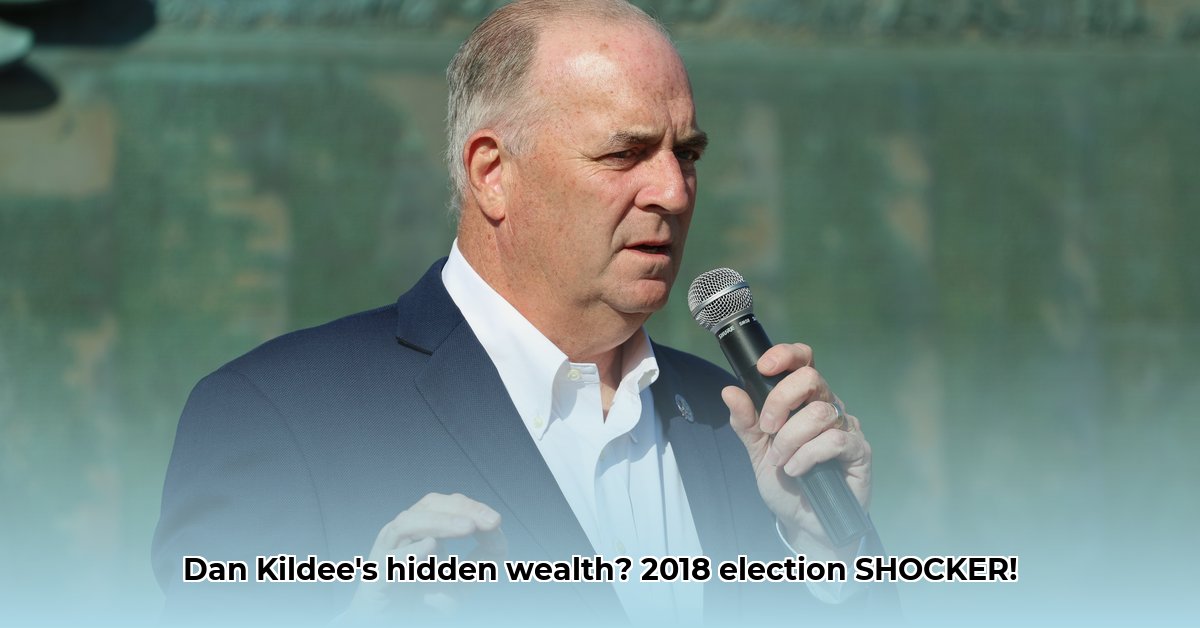
The 2018 Michigan elections saw a significant disparity in candidate wealth, raising questions about the influence of personal finances on campaign success. This investigation delves into the net worth of Congressman Dan Kildee, examining how his financial position compared to his opponents and exploring the broader implications for Michigan politics. For comparison, see this analysis of another candidate's finances.
Dan Kildee's Financial Landscape in 2018
Reports indicate Dan Kildee's net worth in 2018 was approximately $522,503. While substantial, this pales in comparison to some fellow candidates, notably Dave Trott, whose net worth reportedly reached $119,100,000. This stark contrast highlights the growing influence of personal wealth in political campaigns. How did this disparity affect their respective campaigns and the overall election outcome?
Campaign Strategies: Kildee's Approach
Kildee's campaign strategy seemingly prioritized fundraising and endorsements over self-funding. This contrasts sharply with candidates possessing significantly larger personal fortunes, who might rely more heavily on personal wealth. Did this strategic divergence yield comparable results? The answer requires a closer examination of both spending efficiency and the effects of endorsements.
The Power of Endorsements: Amplifying Influence
Kildee's endorsement of Andy Levin during the 2018 primary election underscores the value of high-profile support. Similarly, Joe Biden's endorsement of Elissa Slotkin significantly impacted other races. Endorsing other candidates for office can prove to be a powerful tool in the political landscape. This highlights how strategic alliances, in some cases, can outweigh substantial financial resources. Did Kildee make better use of political endorsements than his more affluent counterparts?
Unanswered Questions and Data Limitations
Analyzing publicly available financial disclosure forms provides a partial picture. These reports may not accurately reflect a candidate's total wealth and often lack granular detail on advertising spending and “boots-on-the-ground” campaign activities. Crucially, the impact of "dark money" – undisclosed political contributions – remains largely unknown, significantly hindering a complete understanding of financial influences. How do these limitations shape our interpretation of the data?
Wealth and American Politics: A Broader Context
The role of wealth in US elections is a persistent concern. The 2018 Michigan elections, with their striking differences in candidate net worth, serve as a microcosm of this larger issue. Did the financial disparity between candidates significantly influence election outcomes? Further research is needed to definitively answer this question.
Campaign Finance Transparency and Reform
The 2018 Michigan congressional races highlight the need for increased transparency in campaign finance. Increased calls for stricter regulations and the exploration of public campaign funding underscore the desire for fairer and more democratic elections. Is it possible to create a system of campaign funding reform that minimizes the impact of candidate wealth while maintaining political participation?
A Comparative Look at 2018 Michigan Candidates
| Candidate | Reported Net Worth (approximately) | Key Campaign Strategies |
|---|---|---|
| Dave Trott | $119,100,000 | Likely heavily self-funded |
| Dan Kildee | $522,503 | Focused on endorsements and fundraising |
| Mike Bishop | Data unavailable | Data unavailable |
(Note: This table presents limited data. A comprehensive analysis requires significantly more research.)
The interplay between campaign financing, candidate wealth, and election outcomes is complex. This analysis offers preliminary observations, but further investigation is needed to fully understand the intricate relationships at play. The dynamic nature of these factors deserves continued scrutiny.
How Did Campaign Financing Influence the 2018 Michigan Elections?
The 2018 Michigan congressional races involved approximately $80 million in campaign spending. 1 This massive influx of funds begs the question: Did this translate directly into electoral success? The answer isn't straightforward.
Spending Strategies: Incumbents vs. Challengers
Studies suggest that incumbent candidates often benefit from less campaign spending than challengers. Their established name recognition and existing voter networks provide inherent advantages. Conversely, challengers need to spend significantly more to overcome this incumbency advantage. How did these dynamics play out in the 2018 Michigan races?
The Role of Special Interest Groups
Special Interest Groups (SIGs) often heavily contribute to campaigns. However, the impact isn't always directly proportional to election outcomes. In some instances, lesser financial contributions from SIGs correlated with higher win rates for incumbents, suggesting that efficient resource management may often outweigh sheer financial power.
Data Limitations and Unknowns
While studies show a positive correlation between campaign spending and winning, many other variables affect outcomes. Candidate quality, policy platforms, and the broader political environment all contribute. It’s the complexity of these factors that makes isolating the impact of campaign funding challenging. What are the implications of these limitations?
Key Takeaways on Campaign Financing in 2018:
- Campaign spending influences elections, but the relationship is not necessarily linear.
- Incumbents benefit from existing name recognition and networks, reducing their need for extensive spending.
- Special interest group impact is nuanced, not solely determined by the amount of financial contributions.
- Establishing direct causation between spending and electoral victory is complicated by numerous factors.
- The lack of transparency remains a hurdle in fully understanding the influence of money in elections.
Michigan Advance. https://michiganadvance.com/briefs/report-michigan-congressional-races-cost-80m-in-2018/ ↩